Emergency Safety Line: +91 95500 47000 info@hydammonia.in
PESO Storage Validity: Active through 2028
Home  /  Safety & Regulatory Certifications
Statutory Compliance • Zero Hazard Culture

Safety, Accreditations &
Regulatory Compliance

Ammonia is an indispensable chemical requiring uncompromising discipline in storage, handling, and logistics. HACPL operates under verified statutory approvals from the Petroleum and Explosives Safety Organization (PESO), the Pollution Control Board, and international ISO quality standards.

Verified Credentials

Statutory Licenses & Quality Accreditations

Click any certificate to inspect full high-resolution credentials, registration numbers, and validity periods.
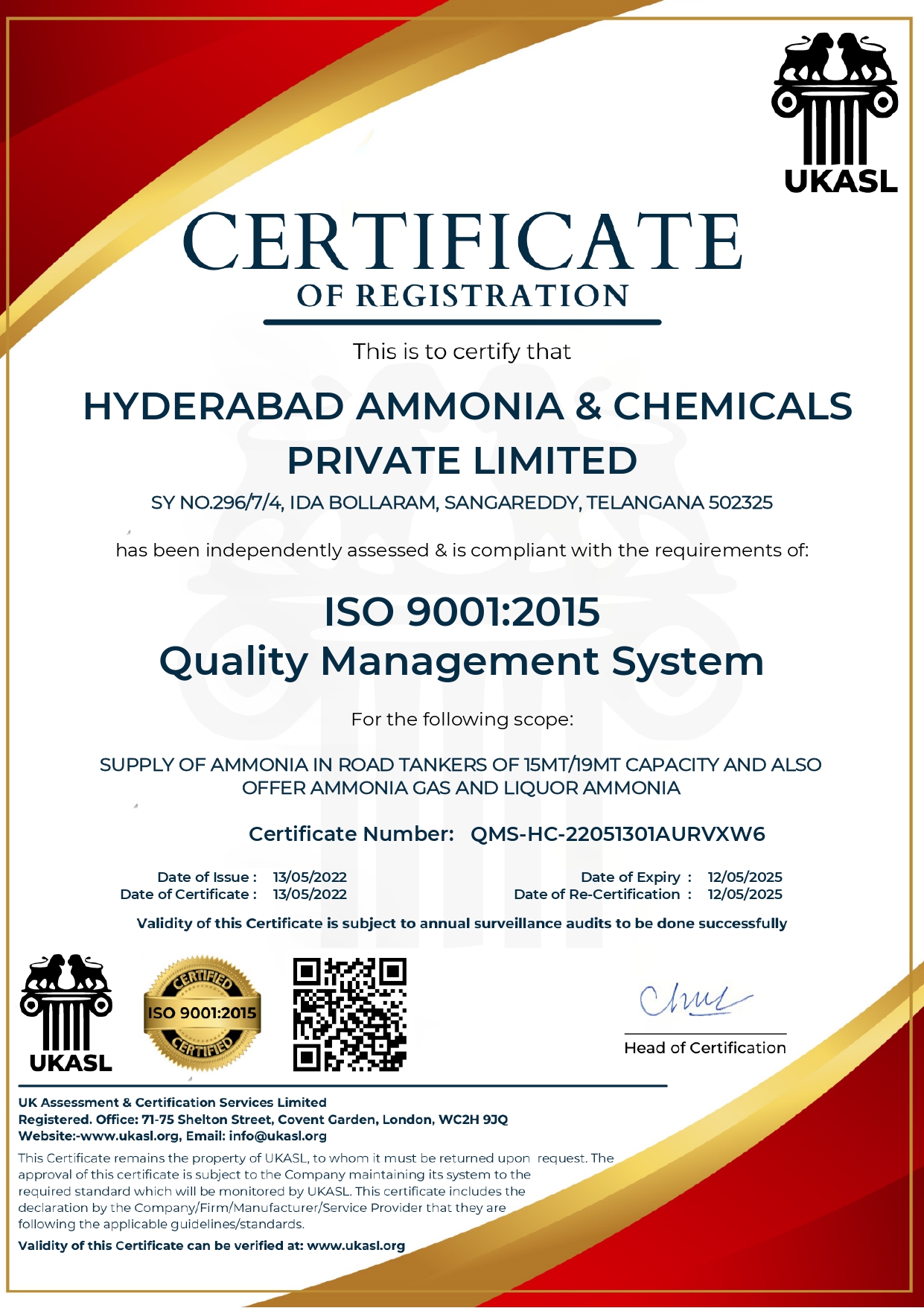
ISO 9001:2015 Certificate

ISO 9001 : 2015 Certification

Quality Management System (QMS) • Verified
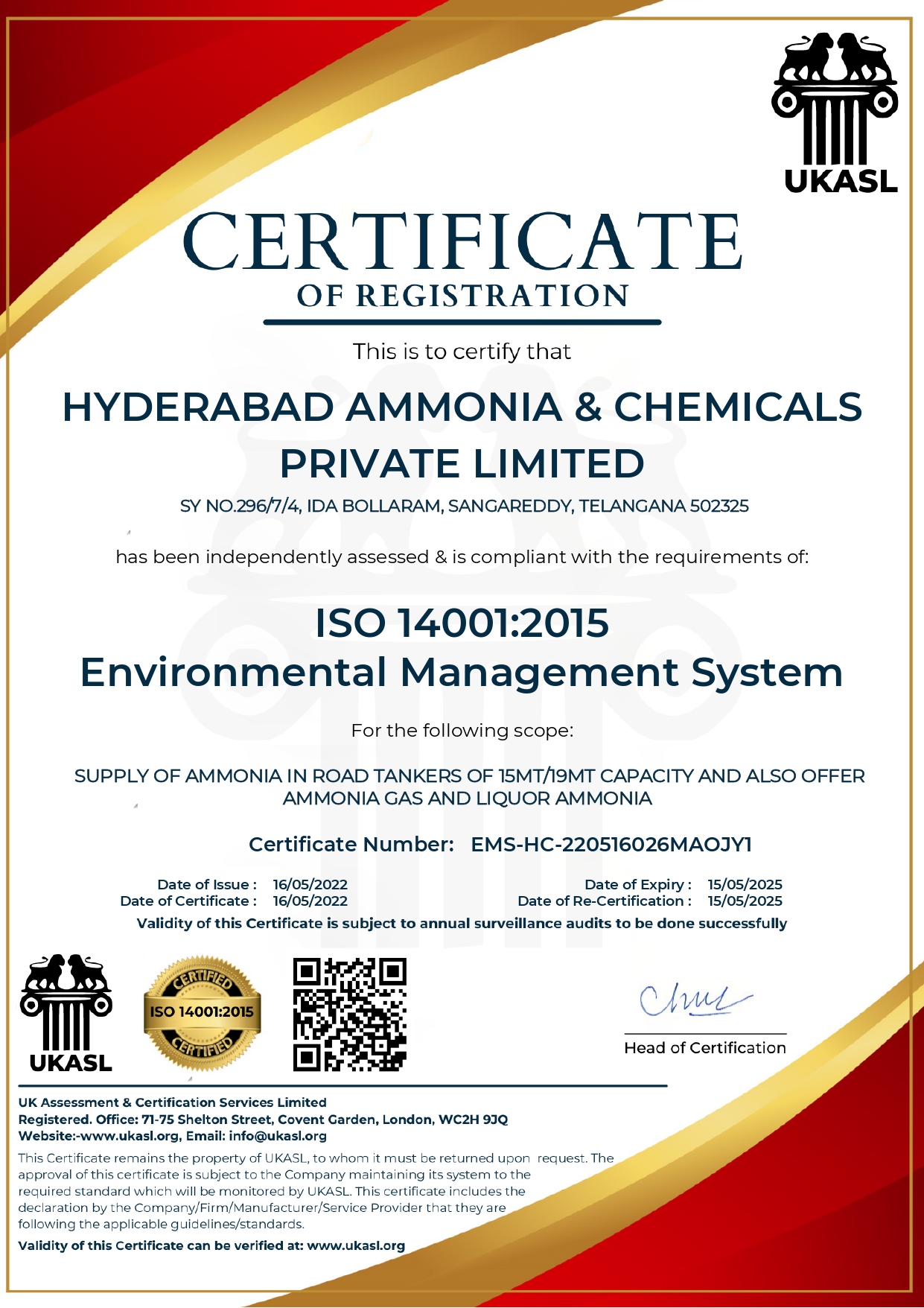
ISO 14001:2015 Certificate

ISO 14001 : 2015 Certification

Environmental Management System (EMS) • Verified
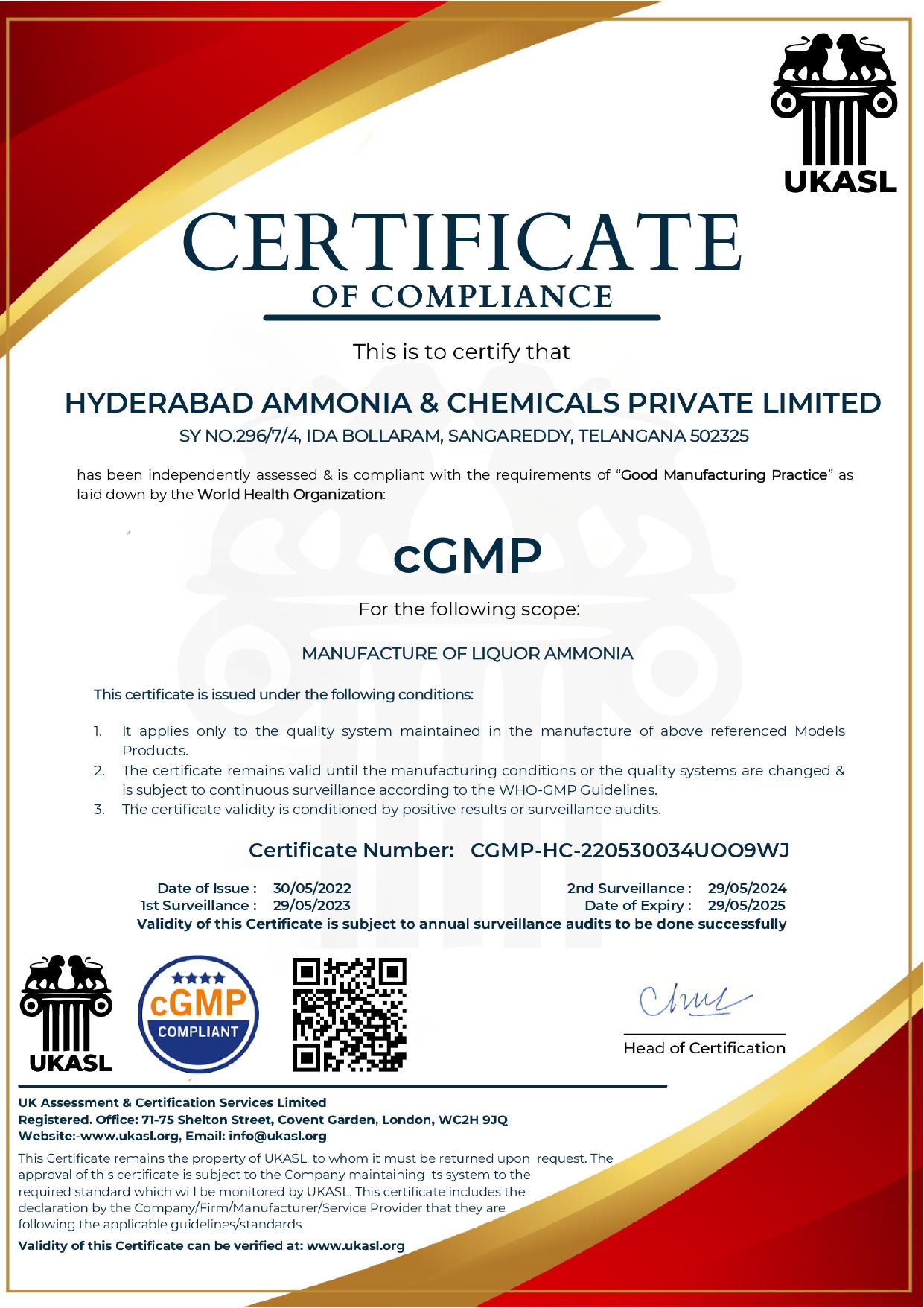
cGMP Certificate

cGMP Compliance Certification

Current Good Manufacturing Practice • Pharma Grade
PESO Storage Installation License Validity

PESO Storage License (Valid to 2028)

Petroleum & Explosives Safety Org • Static Vessel
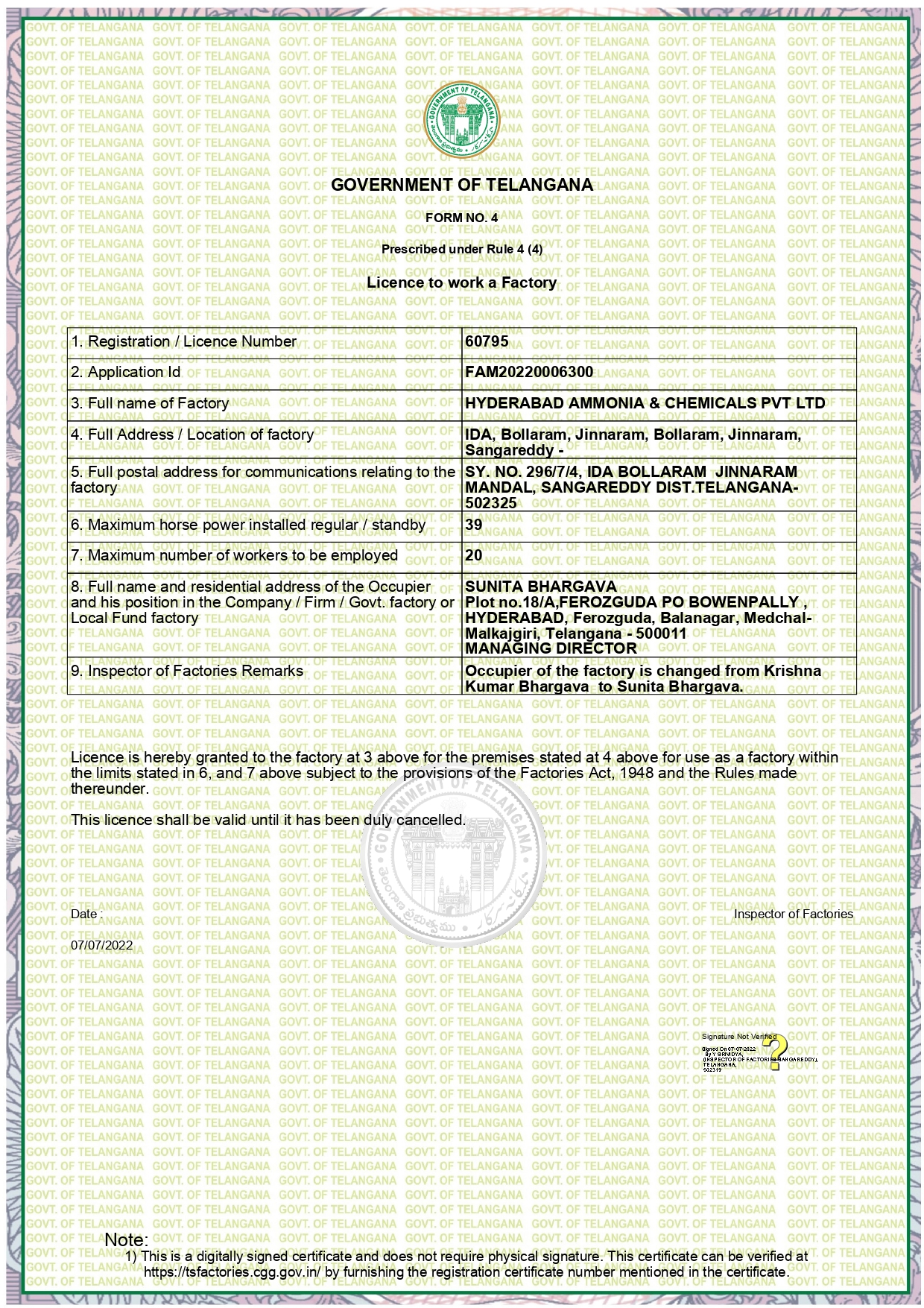
Factory License Telangana

Factory License & Plant Approval

Dept. of Factories, Govt. of Telangana • IDA Bollaram
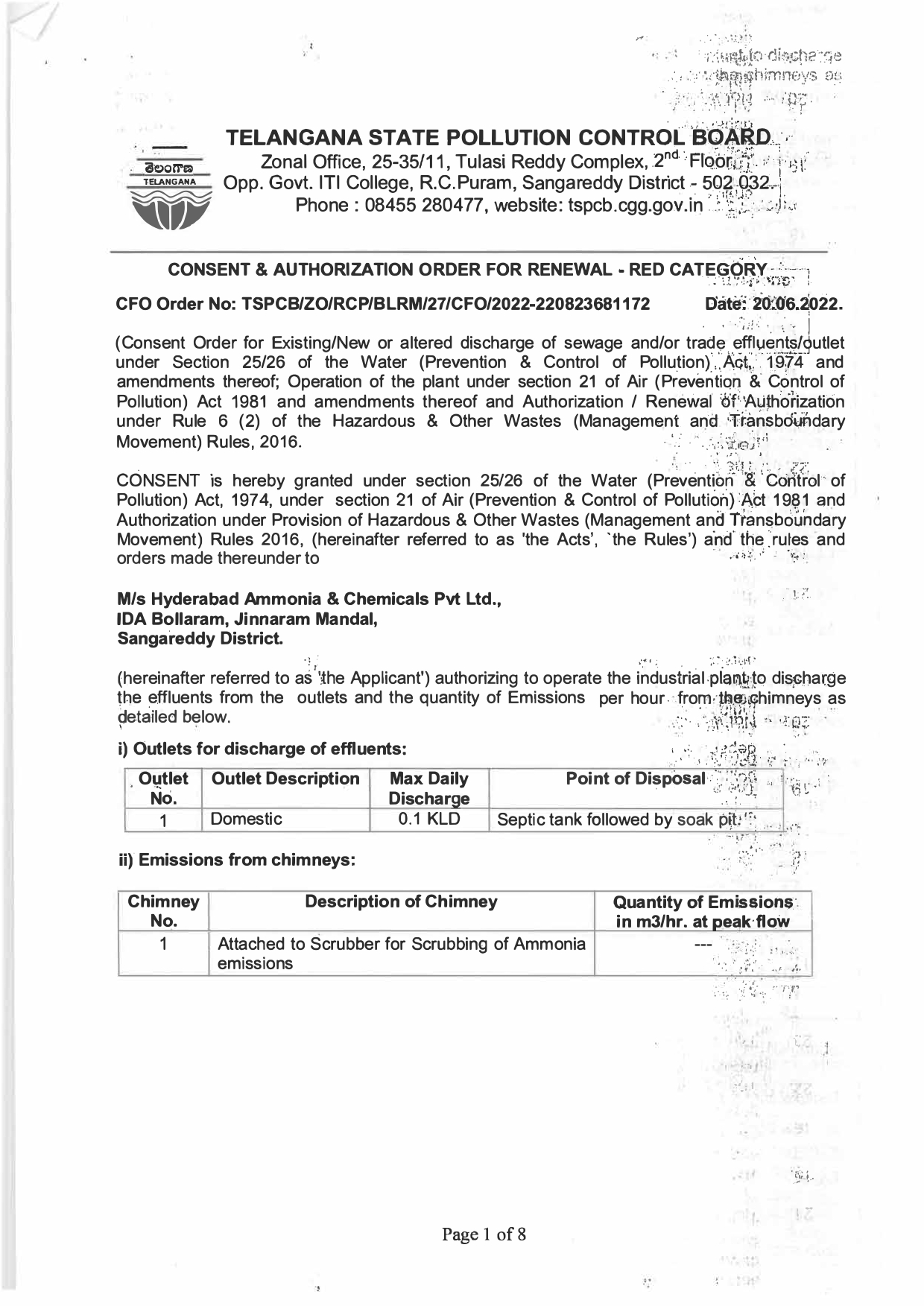
TSPCB CFO Renewal

Pollution Control Board CFO Renewal

Telangana State Pollution Control Board • Consent for Operation
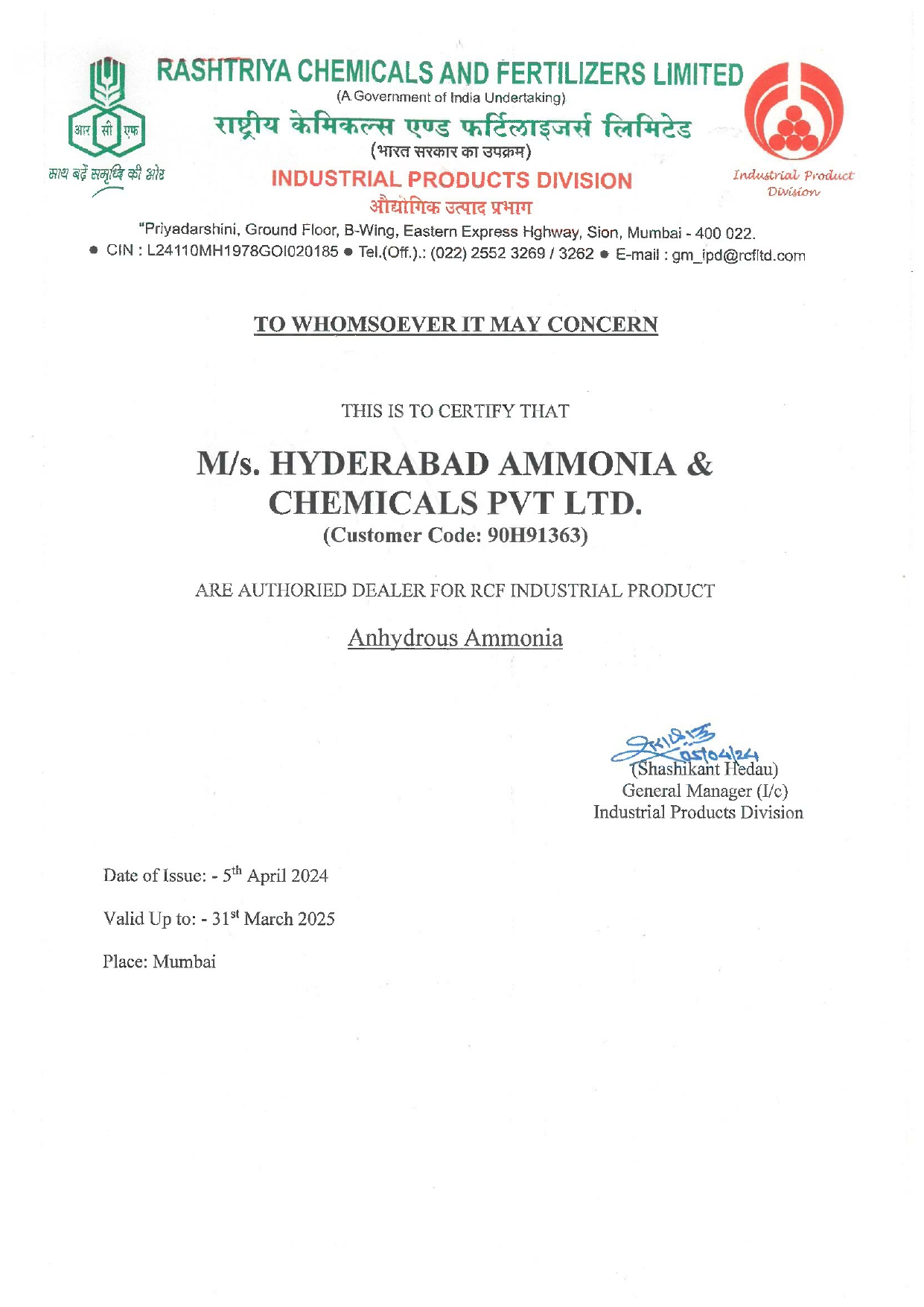
RCF Ammonia Storage Approval

RCF Storage Installation Approval

Technical Storage Vessel Verification • Certified
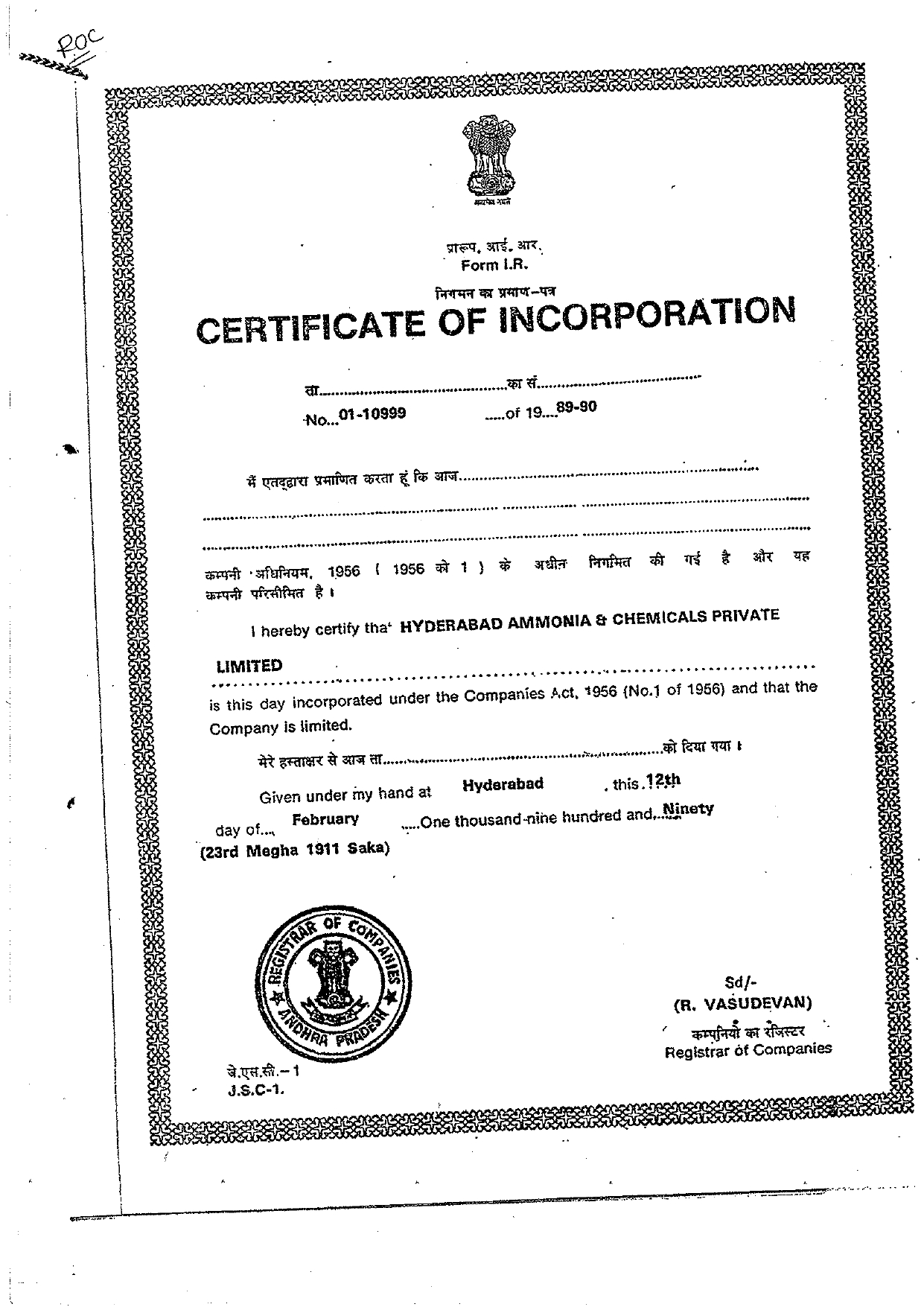
Certificate of Incorporation

Certificate of Incorporation

Ministry of Corporate Affairs • Founded 1990
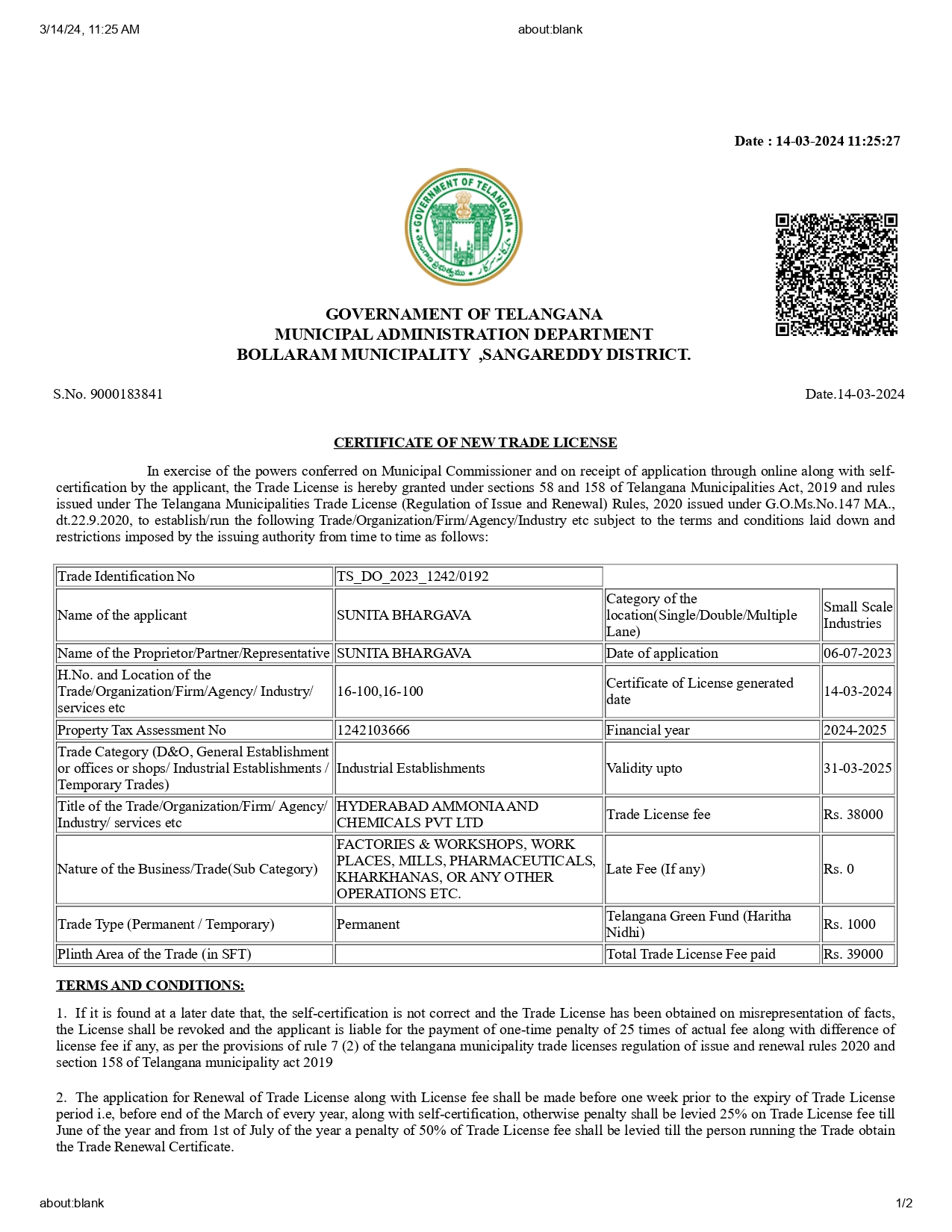
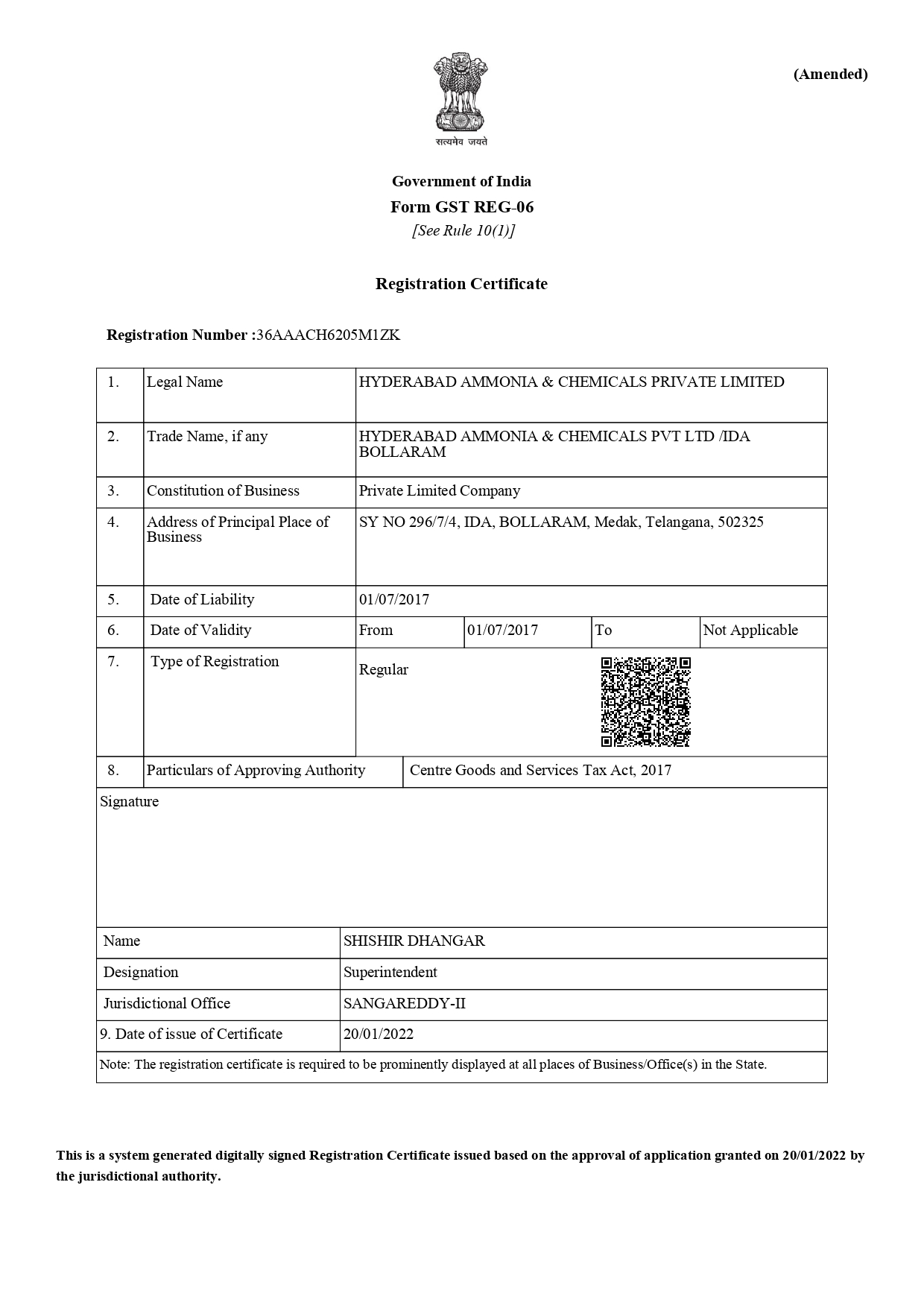
GST Registration

GST Registration Certificate

Government of India • Tax Compliance
Safety SOPs

Industrial Ammonia Handling Protocols

Essential guidelines for factory managers, cold store operators, and chemical technicians handling compressed ammonia gas and aqueous solutions.

Personal Protective Equipment (PPE) Matrix

Technicians working with ammonia decanting, cylinder connection, or valve sampling must adhere to mandatory PPE standards:

  • Gas Decanting / Sampling: Full-face respirator with ammonia filter canister (green band, K-type) or positive-pressure Self-Contained Breathing Apparatus (SCBA).
  • Skin & Hand Protection: Heavy-duty impermeable neoprene or nitrile gloves, chemical-resistant PVC apron, and steel-toed boots.
  • Eye Protection: Splash-proof chemical safety goggles and full polycarbonate face shield.

First Aid & Emergency Exposure Measures

Immediate action protocols in the event of accidental exposure:

  • Eye Contact: Flush immediately with clean lukewarm water for at least 15–20 minutes holding eyelids wide open. Seek immediate ophthalmological care.
  • Inhalation: Move casualty to fresh air immediately. Keep warm and resting. Administer oxygen if trained personnel are present.
  • Skin Contact: Strip contaminated clothing under an emergency deluge shower while flushing affected skin with water for 15+ minutes.

Storage & Ventilation Requirements

Proper facility design prevents hazardous vapor accumulation:

  • Store cylinders and drums in cool, dry, well-ventilated areas away from direct sunlight, boilers, and open flames.
  • Keep cylinders chained vertically with valve protection caps securely screwed on when not in use.
  • Ensure ammonia gas detectors with audio-visual alarms set at 25 ppm (TWA) and 35 ppm (STEL) are calibrated regularly.

Vapor Cloud Knockdown & Spill Response

Ammonia has high solubility in water (1 volume of water dissolves over 700 volumes of gas):

  • In case of vapor leak, deploy fine water fog or water curtain sprays upwind to absorb and knockdown the ammonia cloud.
  • Never direct water streams directly into liquid ammonia pools, as heat of solution increases vapor evaporation.
  • Contain diluted runoff water with sandbags to prevent entry into municipal drains and rivers.